

I Treated Claude Like Tennis Practice
I thought repetition was making me better. I was just getting faster at the same mistakes.

I played tennis professionally (or at least I attempted to, but unfortunately - didn’t have much success).
Very hard, but beautiful sport. Trust me, I am not biased at all…
About a decade of my life went into it. Most of those years happened on a practice court, doing the boring part.
Repetition is how you build skill in tennis: thousands of serves, thousands of forehands. The habit compounds. You get faster, cleaner, better.
So “repetition” and me became best friends through tennis. I trusted it.

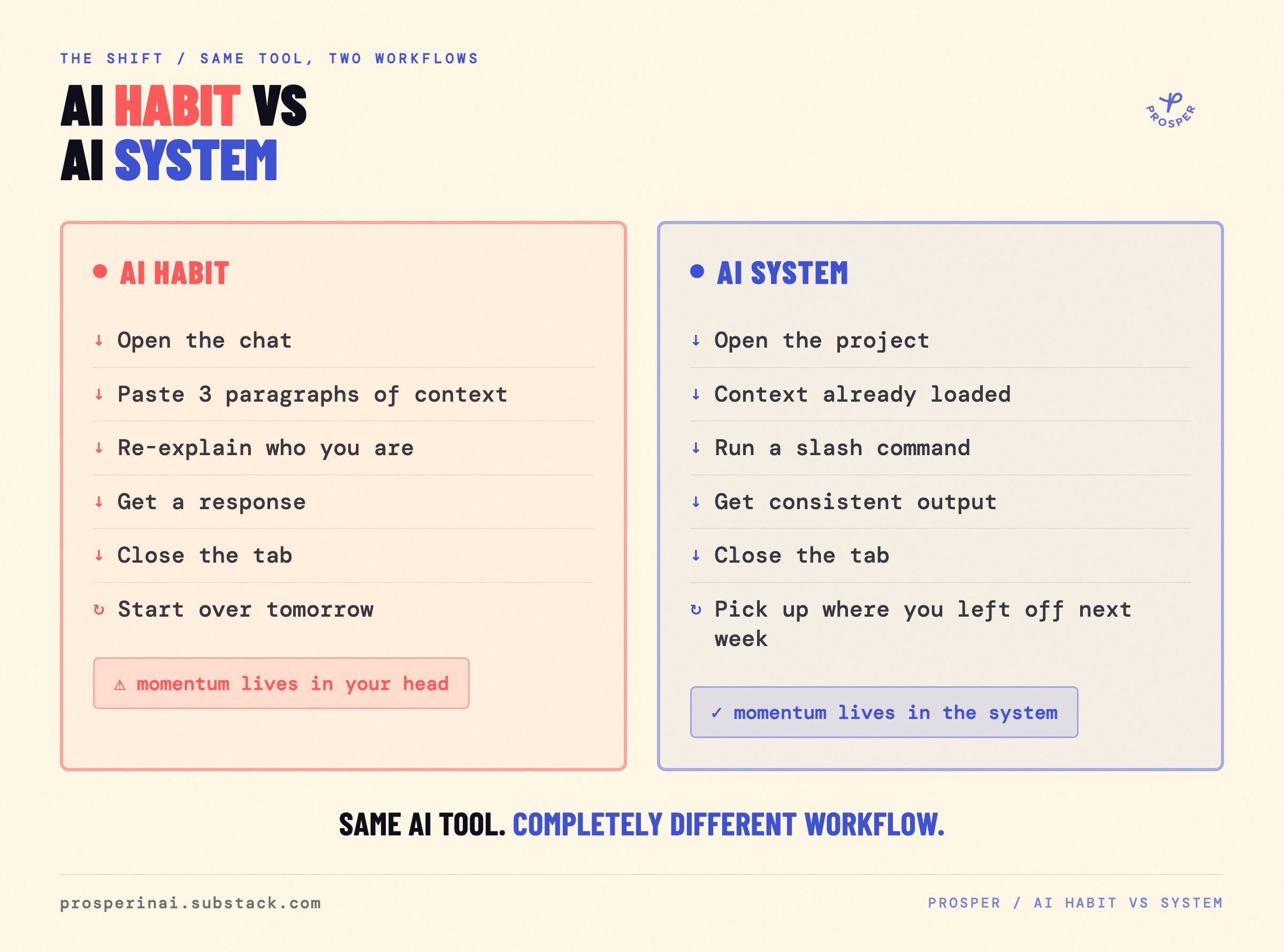
When I started doing work with Claude, I treated it the exact same way. Every session, I’d open the chat and paste the same three paragraphs explaining who I was, what I was building, what I don’t want it to do, what voice I needed. Copy the response. Close the tab. Next day: repeat.
Thousands of tokens burned just getting Claude to baseline. Thousands more reminding it of my constraints. Thousands more to tell Claude what I missed in my own instruction.
It felt efficient because I was using AI daily. I got faster at typing those paragraphs. But I wasn’t building skill. I was just getting faster at the same mistakes.
In tennis, your body finds ways to compensate for bad habits. It works… for a while. It can last, but it limits how good you can get.
Same with AI. Re-typing my context every session compensated for not having a real setup. It worked. But it was limiting me, and I couldn't see the ceiling I was building.
That’s the AI habit trap.
The AI Habit Trap: Why Repetition Feels Like Progress
Habits accumulate, and it’s good. You can build amazing habits with sports or anything else.
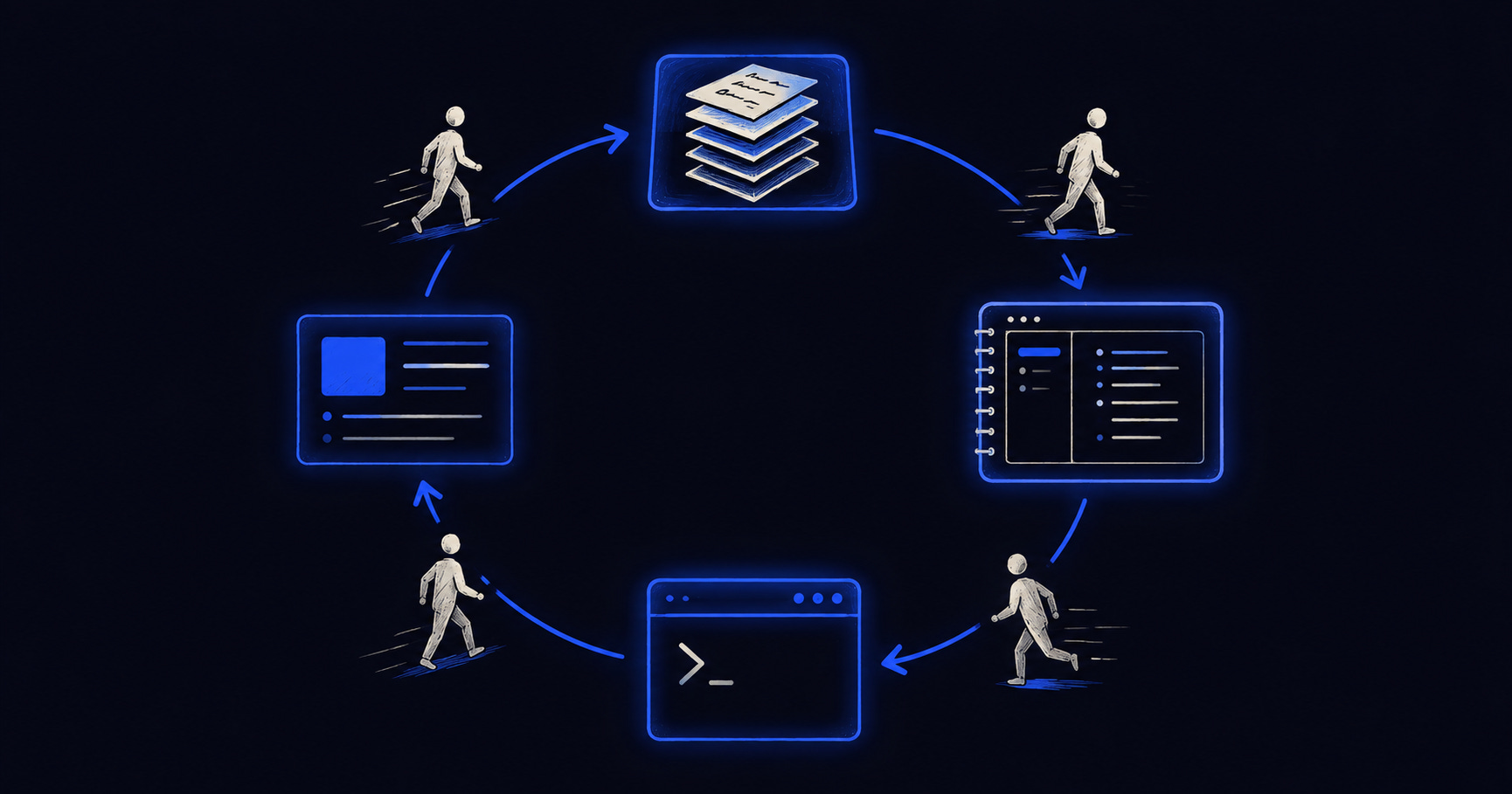
But the good thing about systems is that it can compound over time, and the more you learn, the better your system becomes. I believe you can build on top of those systems and make it much better for yourself.
The cost of repeating yourself:
- Token burn - re-explaining context every session (no one like that in the AI world)
- Cognitive load - remembering what to include in your setup and in your prompts (I always forgot things here and there)
- Fatigue - you simply get tired of typing the same things over and over
In tennis, a good coach spots the bad habit before you do it for a decade. Nobody did was explaining that stuff to me when I started working with AI.
That's Prosper. Think of it as the tennis coach: I build and test the systems that actually work, then hand you the ones that do, so you skip the months of repetition and start with infrastructure that compounds from day one.
How AI Systems Actually Work
A good coach tries to drill the right habit into you until it runs on its own, so that when you play matches, “that program is already installed”. A system does the same for your AI work: it remembers you, and for you.
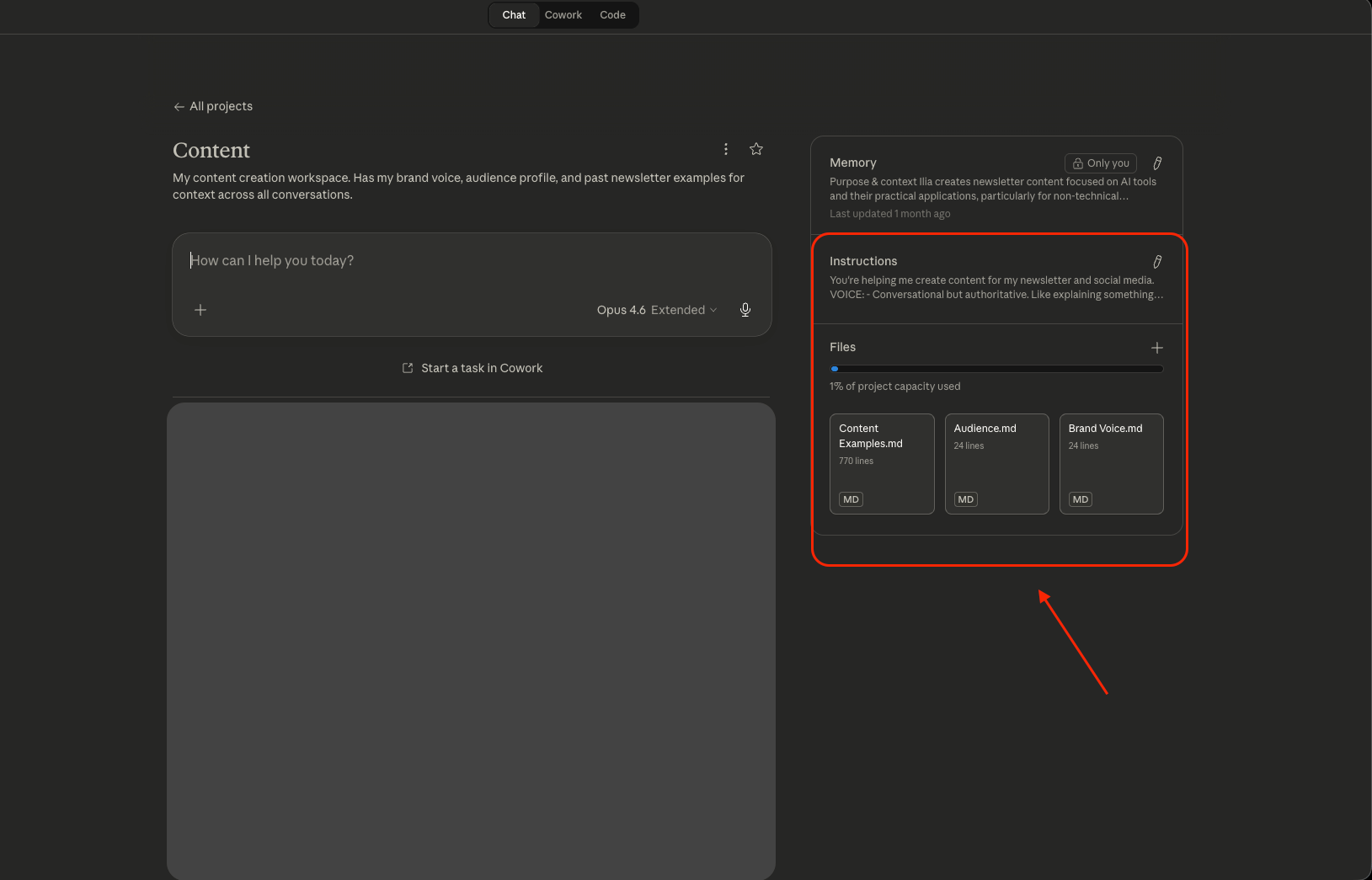
For example, I didn’t realize how much waste was in my workflow until I started using Claude Projects. Suddenly the context was there, all the time. I uploaded my “voice_profile.md”, my project goals, my constraints, my previous work that I liked. Now every session started with Claude already knowing what I needed. No setup paragraph required.
If you want to know how to create “voice_profile.md”, read the guide in my guest post.
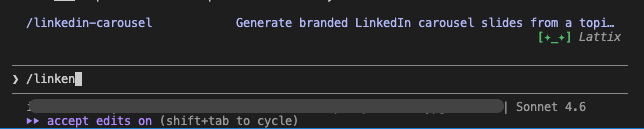
Then I built skills and slash commands that encapsulated my most common workflows. A single word triggered a multi-step process I’d previously explained from scratch every time.
Then folder instructions that auto-loaded when I navigated to specific directories.
And all of these changes made a pretty big difference in how Claude started responding to me.
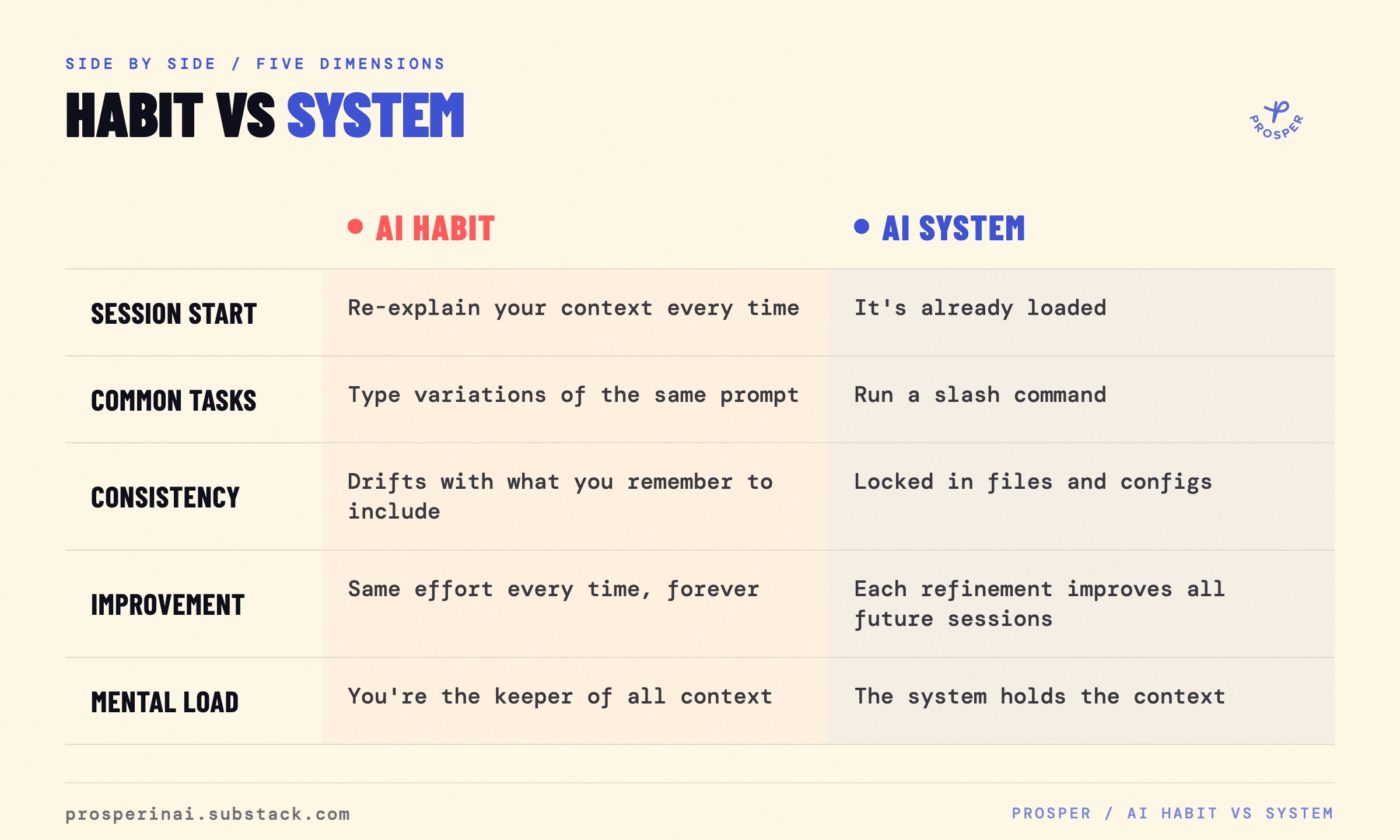
Session start. With a habit, you re-explain your context every time. With a system, it’s already loaded.
Common tasks. Habits mean typing variations of the same prompt. Systems mean running a slash command.
Consistency. Habits drift based on what you remember to include. Systems stay locked in files and configurations.
Improvement. Habits give you the same effort every time, forever. Systems compound - each refinement improves all future sessions.
Mental load. With habits, you’re the keeper of all context. With systems, the system holds the context.
What Systems Actually Look Like
I don’t want to give you a setup guide here. I’ve done it with my previous posts.
But I do want you to recognize a system when you see one, because the pattern repeats across tools.
Claude Projects - Context that persists across sessions. Files you upload once and reference forever. A project description that frames every conversation in the same scope.
Skills / Slash Commands - Workflows you define once and trigger with a single word. No re-explaining. No variation. Same process, same output structure, every time.
CLAUDE.md - Rules and preferences that load automatically when Claude Code opens your repository. It can be your voice, your patterns, your constraints. Claude reads before it in every single session.

MCP Servers - Connections to your actual tools (Gmail, Drive, Notion) that let Claude work with your real data instead of copy-pasted summaries.
The pattern: Context moves from your head into the tool. From ephemeral (typed every session) to persistent (loaded automatically). From manual (you manage it) to infrastructural (it’s just there).
Here’s a good setup guide for you:

The 2-Week Test: Do You Have a Habit or a System?
Here’s how you know which one you have:
Can you stop using this for two weeks and pick up where you left off?
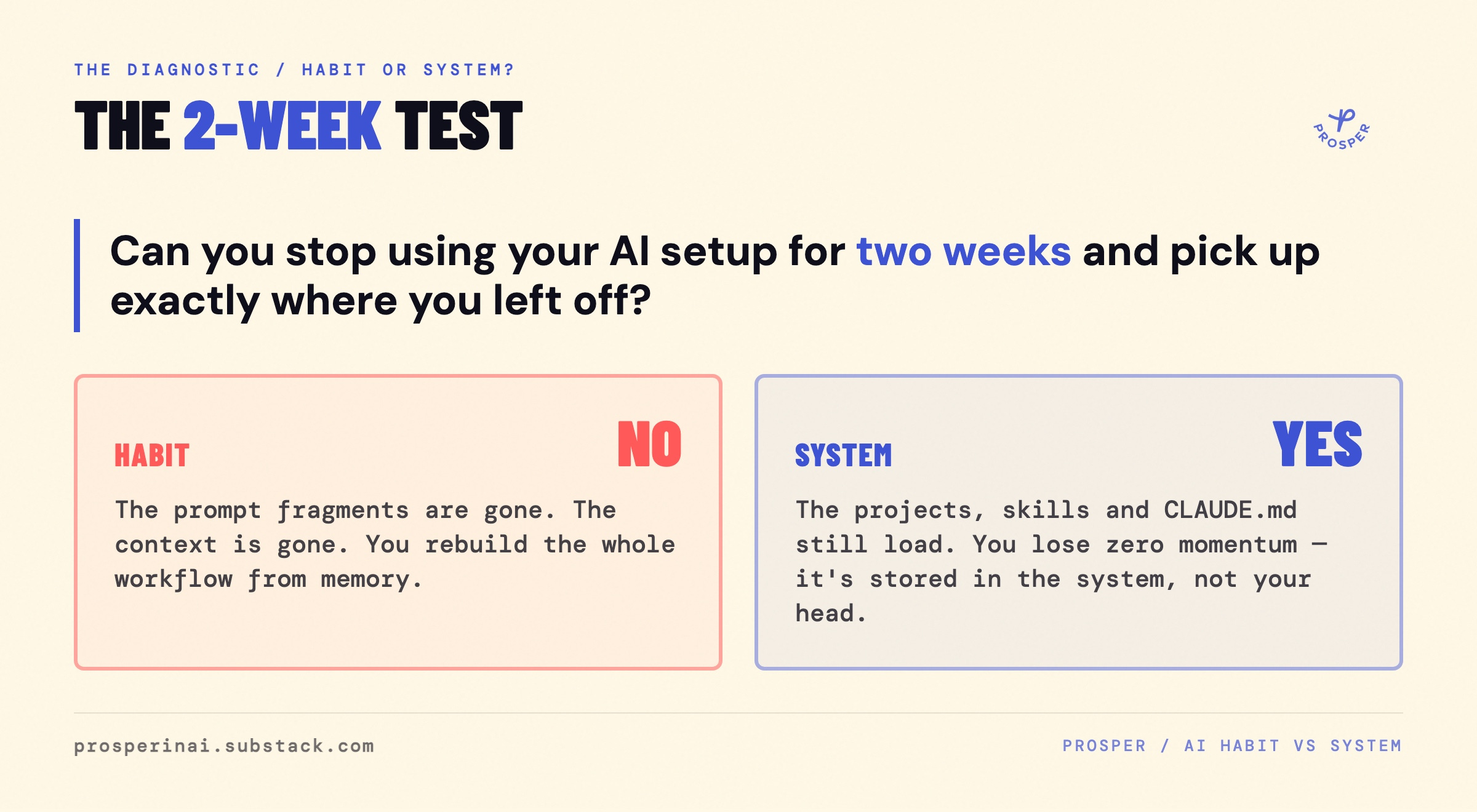
With a habit: no. You’ve forgotten the prompt fragments. The context is gone. You have to rebuild your workflow from memory.
With a system: yes. The Projects are still there. The skills still work. The CLAUDE.md still loads. You lose no momentum because the momentum is stored in the system, not in your head.
The Hidden Cost of AI Habits vs Systems
When you’re stuck in habit mode, every session is a fresh start. You can’t refine your approach because you’re too busy re-creating it.
You can’t iterate on what works because what works is scattered across dozens of chat histories you’ll never read again. Yes, memory in Claude or ChatGPT is much better. But building systems for your work is a good way to level up from casual chatting with AI.
A system lets you improve. When you notice a better way to frame a request, you update the skill. When you discover a new constraint, you add it to CLAUDE.md. When you refine your voice, you edit the profile file. The next session benefits from everything you learned in the last one.
This is where leverage actually comes from.
AI Habit vs System: Which Are You Building?
Daily AI use doesn’t mean you’re building systems. You can use AI for a year and have nothing to show for it, but a pile of chat histories.
The real leverage comes when your AI setup remembers what you’ve already decided, automates what you do repeatedly, and improves even when you’re not actively using it.
So which one are you building? Something that evaporates when you close the tab or something that compound in the future?
How to Convert Your AI Habit Into a System
If you recognize yourself in the habit description, the path forward is clear:
1. Audit your current setup. Count how much context you re-type every session.
2. Identify your repetitions. What do you ask for the same way, over and over? That’s your first skill candidate.
3. Move context out of your head. One file. One project. One configuration. Start small, but start persistent.
4. Ask the system question. Before your next AI session, ask: “Am I building a habit, or am I building infrastructure?”
Send this to someone who’s still typing the same prompt fragments every day.
Is it obedient or a rebel?