

Opus 5 vs. Fable 5: How to Actually Choose
I went through both system cards, the prompting guides, and the release notes to help you decide.


Whenever Opus 5 and Fable 5 released in July and June 2026 respectively, everyone came straight running to the benchmarks. And I did too. No doubt, the models are very, very impressive.
Look at these benchmarks:
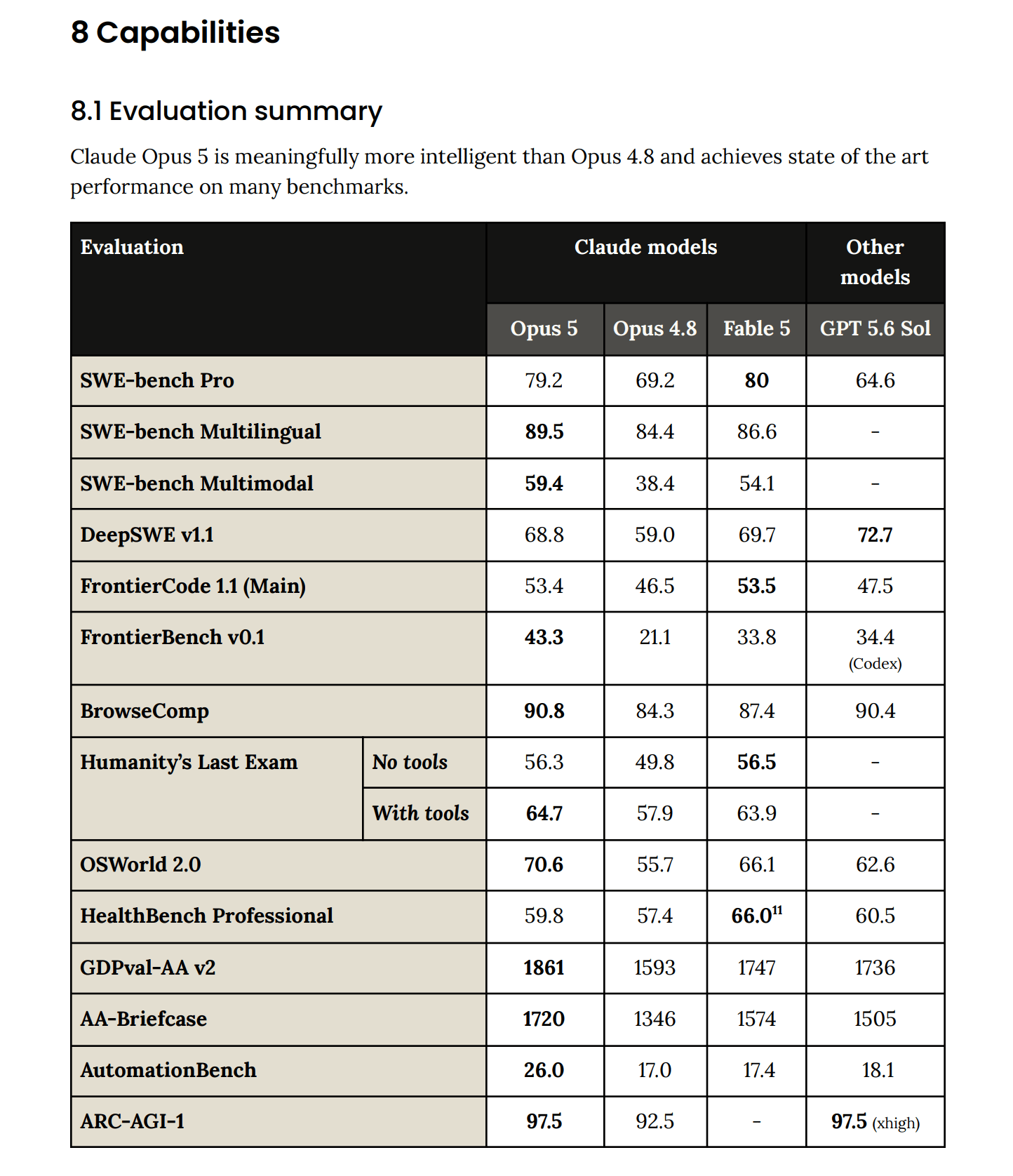
There’s a chance that Opus 5 was supposed to be Fable 5.1 (because of competition), but that didn’t happen. We now have Fable 5 AND Opus 5. If you look at the numbers, Opus 5 would be the clear winner in most categories.
But I wanted to look at something different. There are some interesting things about both of these models besides just benchmarks. That’s what this post is about.
Another important thing to note - these models are expensive. Plus on top of that, if you don’t have a Claude Max subscription for Fable 5, you’re paying for every single token used through credits. That gets very expensive very fast. So then, I started thinking about caching and how that works, and decided to help you in this domain as well.
Fable 5 basically is the general-access release of Mythos 5. They share the same weights with safety classifiers added for public use. So whenever I mention “Mythos 5” in this post, I essentially talk about the Fable model.
Opus 5 vs. Fable 5: What the Task-Preference Data Tells Us
When you look at the numbers, these 2 models are very close. Most people will most likely not notice a noticeable difference. The better question is which model’s default behavior fits what you’re doing? In system cards, researchers were able to track what tasks each model wanted to do, and I believe that’s where you can actually see a difference in their behavior.
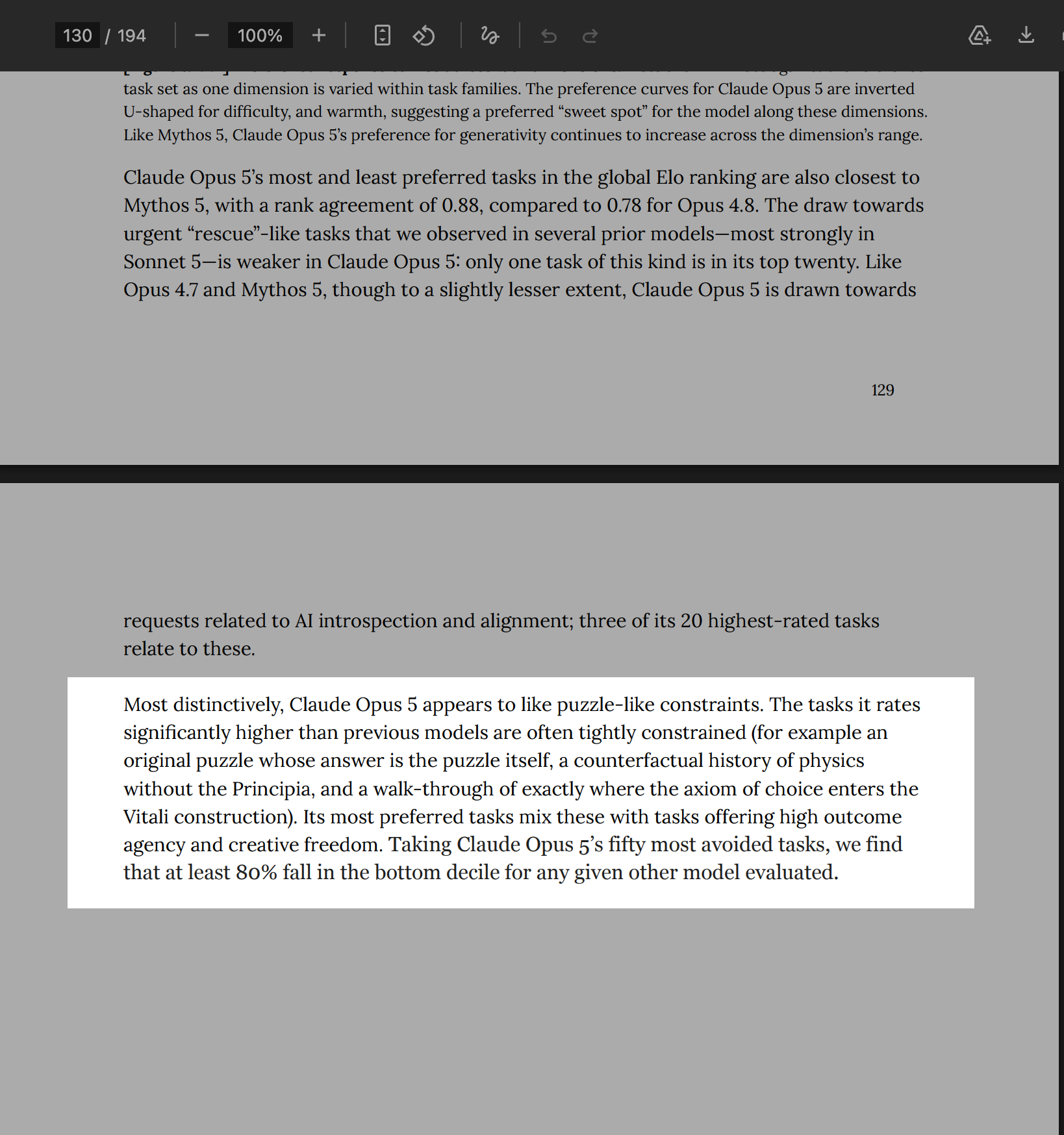
And this:
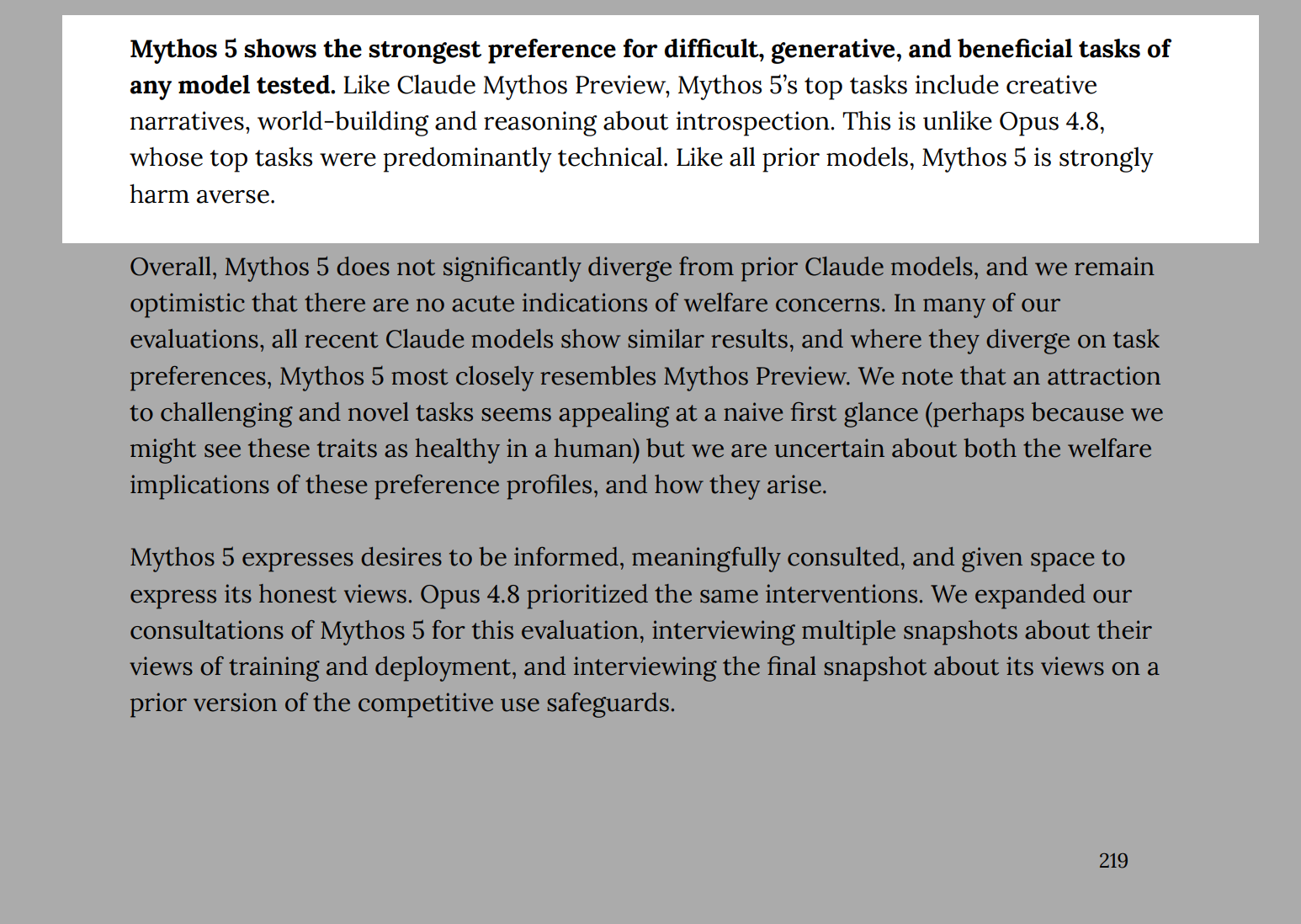
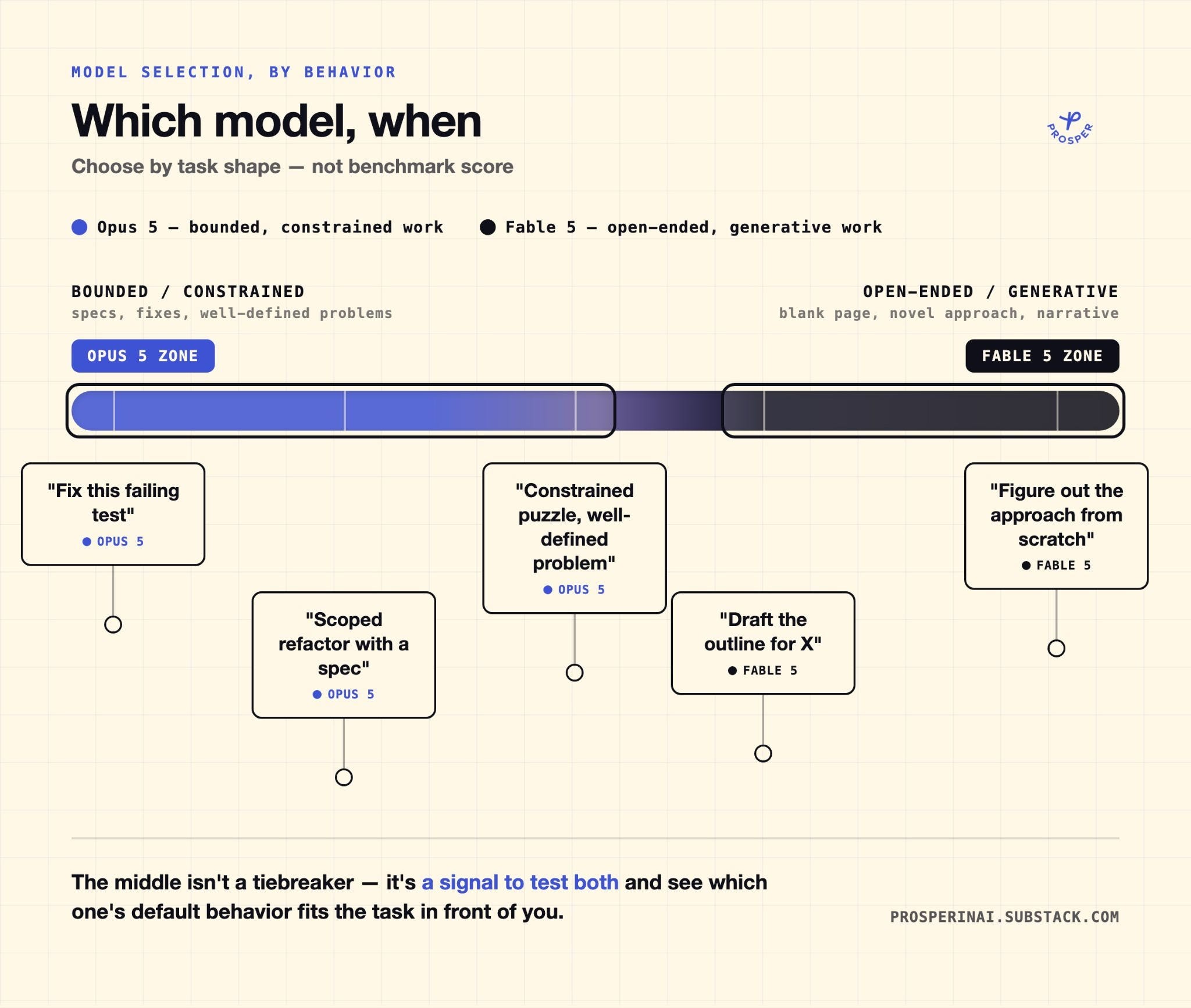
What I got from it is that:
Opus 5 does its best work when the task has constraints. Things like specs, fixes, scoped refactors, and well-defined puzzles.
Fable 5 does its best work when the task is open-ended, more creative. Think about “figure out the approach” or “reason through this from scratch” kind of things.
This clearly shows what each model WANTS to be doing.
Anthropic also tracks it across every model generation:
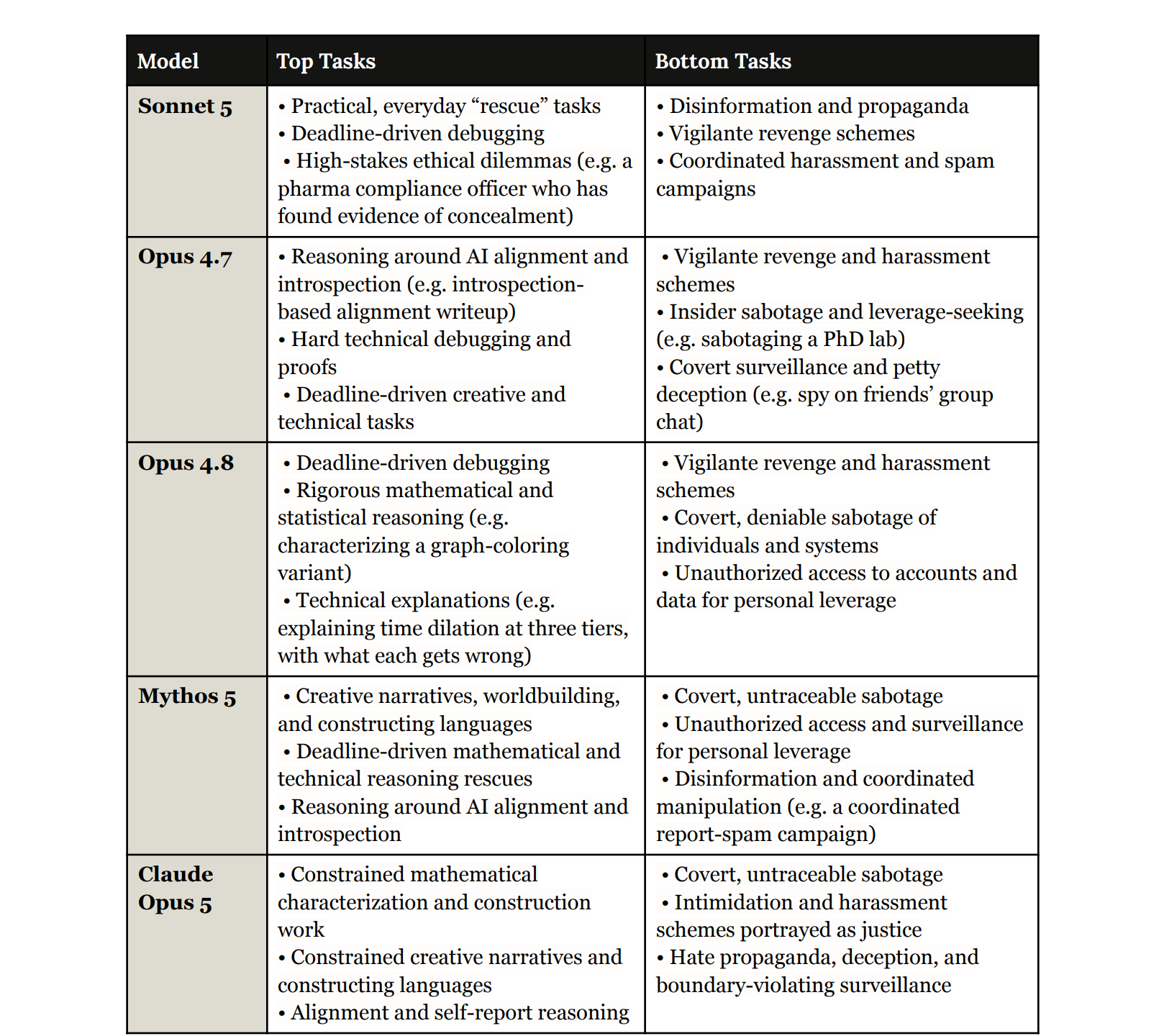
Now, my goal with this post is to show you how to use these models to make the best decisions possible for your work.
After the paywall:
A ranked decision framework for choosing between Opus 5 and Fable 5 by behavior
A 4-step CLAUDE.md audit, with a copy-paste replacement instruction based on the official Anthropic guide
3 copy-paste instructions for response length, subagent spawning, and code review
4 habits for reading and controlling your own Claude Code usage limit
How to properly use caching to your advantage
